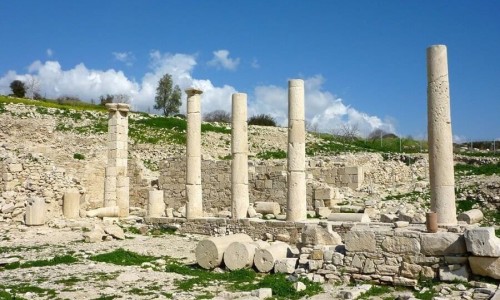


A large steel construction has been dominating the complete archaeological area of Kato Paphos, from the Hellenistic Theatre and the caves of the Fabrica Hill, until the Paphos archaeological park at the Paphos port. It is a much anticipated footbridge which will connect the west and the east sides of the archaeological areas which today are cut off due to the Apostle Pavlou Avenue. This will give visitors the chance to take a walk above ground, along the archaeological treasures in the area.
The footbridge is part of the projects which are in full swing, aiming to join the archaeological sites in Kato Paphos. The large footbridge will connect the west with the east part, one side being near the Roman Hotel and the other side being at the Fabrica Hill.
The project is a study of the archaeological office Simpraxis which won the contest that had been conducted by the government. Based on the winning study, their strategy revolves around a combination of the old as well as the new parts of town.
Near Kato Paphos Bridge
Other places within a short drive, closest first.